What types of family therapy do we use?
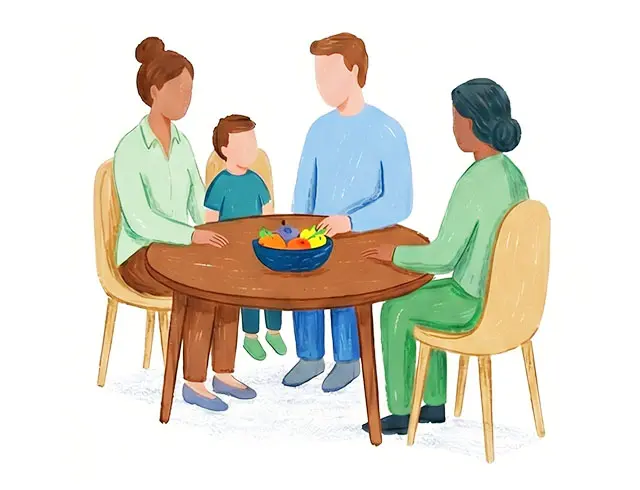
Families come in many shapes — parents and children, blended families, adult siblings, grandparents raising grandchildren — so your therapist adapts the work to who is involved and what you’re facing. Sessions may include the whole family, a parent and one child, or smaller groups at different points.
Approaches commonly used in family therapy include:
- Family Systems Therapy
- Structural Family Therapy
- Emotionally Focused Family Therapy
- Cognitive Behavioral Family Therapy
- Parent coaching & support
- Narrative Therapy
What is family therapy?
Seeing the family as a whole
Family therapy treats the family as a team, looking at how each person’s feelings and behavior affect the others. Rather than placing blame on one member, it helps everyone work on change together. It can help with:
With a therapist guiding the conversation, family members can share what’s hard without it turning into another argument. Together you’ll notice the patterns that keep repeating, agree on clearer roles and routines, and practice new ways of supporting each other, so changes made in session have a chance to last at home.
Benefits of family therapy
Research supports family-based approaches for a range of concerns, from teen behavior and substance use to adolescent eating disorders and recovery after a family crisis. When everyone takes part, change feels shared rather than placed on one person, which can make it easier to keep up.
Better communication
Help each person say what they feel and need, and listen without interrupting or shutting down.
Less conflict at home
Spot the triggers behind recurring arguments and agree on calmer ways to work through disagreements.
Clearer roles & boundaries
Set expectations that feel fair to everyone, especially in blended families or after a separation or move.
Stronger family bonds
Rebuild trust and warmth, and find more moments when the family genuinely enjoys being together.
Signs your family may need support
When home stops feeling like home
- Constant arguing or tension
- Family members avoiding each other or not talking
- A child acting out
- Struggles after divorce or remarriage
- Conflict between parents and teens
- Difficulty coping with a loss or illness
- Secrets or broken trust
- Feeling unheard
In their own words
Experiences shared by our clients
Theo – project manager
Isla – ceramic artist
Rosa – teacher
Lucas – software engineer
Ivy – illustrator
Nora – writer
Owen – entrepreneur
Frequently
Asked Questions
Questions we’re often asked
Q1: Who should attend family therapy sessions?
That depends on your goals. Sometimes the whole household attends; other times your therapist meets with parents, siblings or pairs. Children from age 5 can take part.
Q2: How long does family therapy usually last?
Many families meet for several months, often weekly or every other week at first. Your therapist will plan the length with you and revisit it as things change.
Q3: What happens in a typical session?
Your therapist makes sure everyone gets a turn to speak, keeps the conversation respectful and may suggest small changes or activities to try at home between sessions.
Q4: What if a family member doesn’t want to come?
It’s common for someone to feel unsure. You can start with whoever is willing; change in part of the family often makes it easier for others to join later.
Q5: Can family therapy happen online?
Yes. Families located in New York or New Jersey can meet by secure video, and some families mix in-person and online sessions.