Who may be a candidate for ketamine infusions?
Ketamine is an anesthetic medication approved by the FDA for anesthesia; using it in low doses for depression is off-label, though a growing body of research supports it for some people. Before recommending infusions, our psychiatrists complete a full evaluation to understand your history and make sure the treatment is medically appropriate for you.
Screening usually includes a review of:
- Previous antidepressant trials
- Current medications
- Blood pressure & heart health
- Substance use history
- History of psychosis or mania
- Pregnancy & other medical conditions
What is ketamine infusion therapy?
How an infusion works
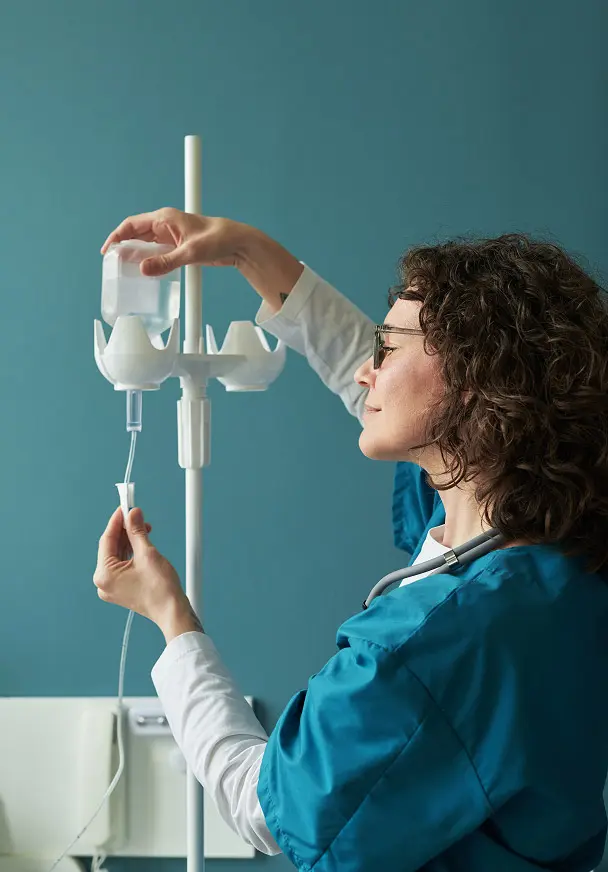
A low dose of ketamine is given slowly through an IV, typically over about 40 minutes, while a clinician monitors you. A course of care usually includes:
During the infusion, you rest in a quiet, private room while we track your blood pressure, heart rate and oxygen levels. Many people notice a dreamlike or detached feeling that fades soon after the infusion ends. You’ll stay with us until you’re steady, and you’ll need someone to take you home—no driving until the next day. Treatment often begins with a series of infusions over a few weeks, followed by a review of how you’re responding.
What to know before you start
Research suggests that some people with treatment-resistant depression notice improvement within hours to days of an infusion, but responses vary and effects can fade without follow-up care. We see infusions as one part of a broader plan that usually includes therapy and, often, medication.
Possible Side Effects
Dissociation, nausea, dizziness and a temporary rise in blood pressure are the most common, and usually ease within hours.
Close Monitoring
A clinician stays with you throughout, checking vital signs and comfort, and the infusion can be paused or adjusted if needed.
Off-Label Use
Ketamine isn’t FDA-approved for depression, and we explain what that means for you before you decide.
Part of a Plan
Infusions work best alongside therapy and regular psychiatric follow-up, so we plan your care around more than the infusion itself.
Is it time to consider infusions?
Signs you may want to discuss ketamine
- Little relief from antidepressants
- Depression that has lasted months or years despite treatment
- Side effects limiting your options
- Persistent hopelessness
- Feeling stuck despite therapy
- Struggling to function day to day
- Recurring depressive episodes
- Exhaustion or low motivation
In their own words
Experiences shared by our clients
Theo – project manager
Isla – ceramic artist
Rosa – teacher
Lucas – software engineer
Ivy – illustrator
Nora – writer
Owen – entrepreneur
Frequently
Asked Questions
Questions about infusions
Q1: How many infusions will I need?
It varies. Many plans begin with a series of infusions over two to three weeks; after that, we review your response and decide together whether occasional follow-up infusions make sense.
Q2: What does an infusion feel like?
Most people feel relaxed, floaty or detached, and some notice changes in sight or sound. These effects are temporary, and a clinician is with you the whole time.
Q3: How do I prepare for an appointment?
We’ll give you instructions in advance, such as not eating for a few hours beforehand, wearing comfortable clothes and arranging a ride home.
Q4: Can I keep taking my medications?
Usually, though some medications can interact with ketamine. Share a full list with us, and your psychiatrist will advise on any adjustments.
Q5: Can ketamine help in a crisis?
Infusions are planned care, not emergency treatment. If you’re in crisis, call or text 988 or call 911, or go to the nearest emergency room.