Who may benefit from TMS therapy?
TMS is often considered when depression hasn’t improved enough with medication, or when side effects make medication hard to continue. It’s also FDA-cleared for obsessive-compulsive disorder. Because it uses magnetic fields, our team screens carefully before recommending a course of treatment.
Before starting, we review:
- Previous treatment history
- Metal implants near the head
- Implanted medical devices
- Seizure history
- Current medications
- Diagnosis & treatment goals
What is TMS therapy?
How a TMS session works
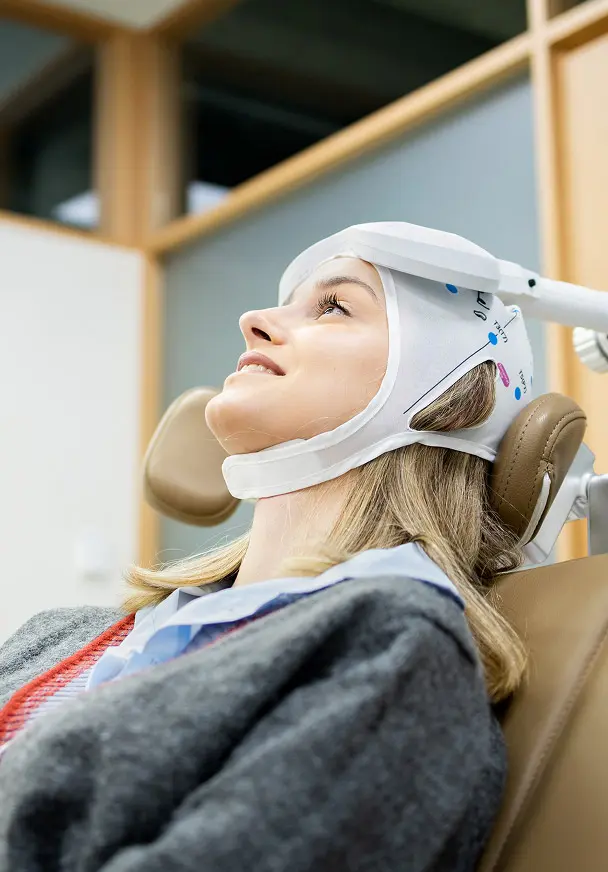
During TMS, a magnetic coil rests against your scalp and delivers brief pulses to a specific area of the brain linked with mood regulation. A typical course includes:
You stay awake and seated in a comfortable chair, and you can read, listen to something or simply rest. Most people feel a tapping sensation on the scalp and hear a clicking sound, so we provide earplugs. Depending on the protocol, sessions last from a few minutes to about 40 minutes, and a standard course is five days a week for around four to six weeks. Afterwards you can drive yourself and return to your day.
Why people choose TMS
TMS has been studied for many years and is supported by clinical guidelines for depression that hasn’t responded to medication. Results vary from person to person, and it can take several weeks to notice change, but many people value what the treatment doesn’t involve:
No Anesthesia
You’re fully awake throughout, with no sedation, so there’s no recovery period or need for someone to drive you.
Few Body-Wide Effects
Because TMS isn’t a medication, it doesn’t cause effects like weight gain or drowsiness that some people get from pills.
Common Side Effects
Scalp discomfort and mild headaches are most common and often ease over the first week or two. Seizures are rare.
Fits Your Plan
TMS can be used alongside medication and therapy, and your psychiatrist will review progress with you throughout the course.
Signs TMS could be worth discussing
When medication hasn’t been enough
- Little benefit from antidepressants
- Side effects that make medication hard to continue
- Ongoing low mood
- Obsessions or compulsions
- Loss of interest in daily life
- Difficulty concentrating
- Preference for a non-drug option
- Recurrent depression
In their own words
Experiences shared by our clients
Theo – project manager
Isla – ceramic artist
Rosa – teacher
Lucas – software engineer
Ivy – illustrator
Nora – writer
Owen – entrepreneur
Frequently
Asked Questions
Questions about TMS
Q1: Does TMS treatment feel painful?
Most people describe a tapping or knocking sensation on the scalp. It can feel uncomfortable at first, and the intensity can be adjusted to help.
Q2: How long does a course of TMS last?
A standard course is usually five sessions a week for about four to six weeks, sometimes followed by a short taper. Your psychiatrist will recommend a schedule.
Q3: What happens in a typical session?
You sit in the treatment chair, the coil is positioned on your head, and pulses are delivered while you stay awake and relaxed. Then you head home.
Q4: Who shouldn’t have TMS?
TMS may not be suitable if you have metal in or near your head, certain implanted devices or some seizure risks. We screen for these carefully.
Q5: Can I go back to work afterwards?
Yes. Because there’s no sedation, most people drive themselves and return to work or daily activities straight after.